CPR LVR training sits in a very practical corner of workplace safety. It is not a broad first aid course for every possible incident, and it is not an electrical theory class. It is focused on a specific high-risk scenario: a person has come into contact with live low voltage electrical equipment, and another worker may need to respond quickly, safely, and competently.
For electricians, electrical workers, builders, construction workers, mining professionals, energy personnel, and workplace safety officers, that focus matters. A rescue from a live low voltage panel is not something most people can improvise safely. The rescuer has to protect themselves first, isolate or manage the hazard where appropriate, remove the casualty from danger using the correct approach, and then begin CPR if the person is not breathing normally. The sequence is simple to describe, but under pressure, it needs to be familiar in the hands and body, not just understood in theory.
A current CPR LVR course commonly combines two nationally recognised components: UETDRMP018 Perform rescue from a live low voltage panel and HLTAID009 Provide cardiopulmonary resuscitation. First Aid Pro’s CPR LVR training follows that structure, delivered face to face over 4 hours with no online pre-learning, with same-day certificates and a 12-month validity period.
That same-day certificate is often the detail people look for first, especially when a site induction, contractor file, or work roster depends on current evidence. The 12-month validity is the detail that tends to matter later, usually when someone checks the expiry date the day before a job starts. Both are worth understanding properly.
What CPR LVR training actually covers
The phrase “CPR LVR” is used because the course combines two linked skill sets. The CPR component is HLTAID009 Provide cardiopulmonary resuscitation. The low voltage rescue component is UETDRMP018 Perform rescue from a live low voltage panel.
The current LVR unit, UETDRMP018, supersedes and is equivalent to UETDRMP007. You may still hear older workers, supervisors, or compliance documents refer to previous unit codes, including UETDRRF004 or UETDRMP007. That happens often in industry because paperwork and workplace habits do not always change at the same speed as national training package updates. The important point is that UETDRMP018 is the current nationally recognised unit for performing rescue from a live low voltage panel.
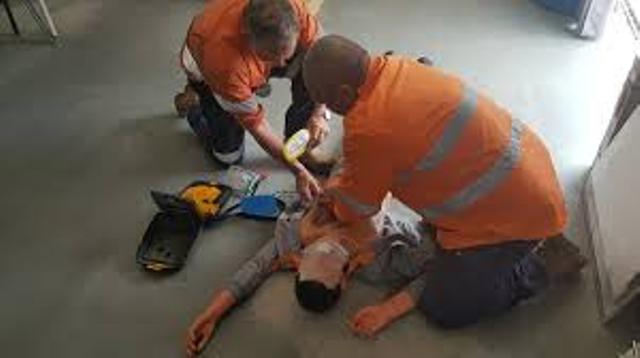
The training is designed around the reality of electrical work. Low voltage does not mean low risk. In Australian electrical language, low voltage can still involve dangerous and potentially fatal current. The purpose of low voltage rescue training is not to turn every worker into an electrical specialist. It is to make sure a person who may be working near live low voltage panels understands how to respond without becoming the second casualty.
The CPR portion is just as central. If a casualty suffers an electrical shock and stops breathing normally, CPR may be required immediately after rescue. For that reason, the two units belong together in many workplaces. LVR without CPR leaves a gap at the point where the casualty’s condition may be most critical. CPR without LVR leaves a gap before the casualty can be safely accessed.
In a well-run cpr lvr course, learners do not simply talk through these ideas. They practise. The course has to assess physical capability, including CPR performance. For HLTAID009, assessment evidence includes at least 2 minutes of uninterrupted CPR on an adult manikin placed on the floor. That is why learners need to be able to kneel and perform compressions on the floor. It can be more physically demanding than people expect, particularly if they have not done CPR training for a while.
Why same-day certificates matter
Same-day certificates are not just a convenience. For many workers, they remove a real operational problem. Electrical contractors may need proof of current lvr cpr training before stepping onto a site. A safety officer may need to update a compliance register before a shutdown. A builder or construction worker may be asked to provide evidence before being approved for a particular work area. In those situations, waiting several days for paperwork can delay work.
First Aid Pro states that certificates for its CPR LVR course are issued the same day. For participants who complete the course and are assessed as competent, that means they can receive their certificate without the usual uncertainty of waiting. The value is straightforward: a worker can attend training, complete the required assessment, and have evidence available promptly for workplace records.
From an employer’s perspective, same-day issue also makes scheduling easier. When refresher dates are left until late, there may be little room between the training session and the expiry of a previous certificate. Same-day certificates reduce the risk of a compliance gap. That does not mean training should be left to the last minute, because sessions can fill and workers can become unavailable, but it does give workplaces a practical buffer.
There is a human side to this too. Anyone who has managed trade compliance knows how quickly small administrative delays become larger problems. One expired certificate can hold up a crew. A missing record can create friction at induction. A worker who completed the right training but cannot prove it may still be turned away. Same-day certification helps close that gap between training and evidence.

Understanding the 12-month validity period
First Aid Pro states that its CPR LVR certificates are valid for 12 months and recommends regular annual refreshers. That yearly cycle is common for this type of training because both CPR and low voltage rescue skills are perishable. People forget details. Physical technique becomes rusty. Confidence fades, or worse, confidence remains while accuracy declines.
The 12-month validity period gives workers and employers a clear renewal rhythm. If a participant completes cpr lvr training in March, they should be planning their refresher before the following March. Not after. In practice, many workplaces build renewals into a monthly or quarterly compliance process. They run reports, identify workers expiring in the next 30 to 90 days, and book training before the deadline becomes urgent.
The annual refresher approach is sensible because the skills are rarely used, yet must be available immediately when needed. A worker may go years without encountering a live low voltage rescue scenario. That is a good thing. But the lack of real incidents means the training room may be the only place where the rescue sequence is rehearsed. The same applies to CPR. Few people perform real CPR frequently, and when they do, the situation is stressful, noisy, emotional, and physically tiring.
A 12-month certificate should not be treated as a guarantee that the holder will perform perfectly in an emergency. It is evidence of recent training and assessment. Workplaces still need safe systems of work, proper supervision, current procedures, and appropriate controls around electrical hazards. CPR LVR training supports those systems. It does not replace them.
The current unit: UETDRMP018 and older LVR terminology
One source of confusion in lvr training is the unit code. Workers who completed the course years ago may remember UETDRRF004. Others may have UETDRMP007 on older records. The current nationally recognised unit is UETDRMP018 Perform rescue from a live low voltage panel, and it supersedes and is equivalent to UETDRMP007.
That equivalence matters when reviewing older documents, but it should not be used as an excuse to keep outdated training indefinitely. If the workplace requires a current low voltage rescue course, the worker should hold current evidence within the required validity period. The fact that one unit superseded another does not make an old certificate current.
It is also worth using the correct language when booking training. Searching for lvr cpr, cpr lvr, low voltage rescue training, cpr lvr course, or lvr course may all point low voltage rescue western Sydney you toward similar training options, but the course details should show the actual units being delivered. For First Aid Pro’s CPR LVR course, the combination is UETDRMP018 plus HLTAID009. That is the key pairing.
In workplace compliance files, clarity helps. A record that says only “electrical rescue course” may cause questions later. A record showing UETDRMP018 and HLTAID009 is much easier for a supervisor, auditor, or client representative to interpret. When work involves multiple contractors and site access requirements, clear documentation saves time.
What the 4-hour face-to-face format means in practice
First Aid Pro’s CPR LVR course is delivered face to face over 4 hours, with no online pre-learning. That structure suits the content. CPR needs physical practice. LVR needs practical demonstration and assessment. While some training topics work well online, this is one where body position, hand placement, timing, and controlled response are difficult to judge through theory alone.
A 4-hour session is long enough to cover the required material, but short enough to fit into a workday with planning. Many employers prefer to roster it at the start or end of a shift, or to group several workers into one session. Because there is no online pre-learning, participants do not need to complete modules before arriving. That reduces one of the common causes of training delays, where workers arrive without having finished the required online component.
Face-to-face delivery also gives the trainer a chance to correct technique in real time. With CPR, small changes matter. Compression depth, rate, recoil, body alignment, and fatigue management all affect performance. With low voltage rescue, the sequence and safety mindset matter. A participant may understand the words but still move too close, rush the process, or miss a key step in a scenario. Practical training exposes those habits before they appear in a real incident.
The 4-hour format does not mean the course is casual. A shorter course can still be demanding when it requires practical assessment. Participants should arrive ready to kneel, move, practise, and demonstrate competence. The CPR assessment requirement of at least 2 minutes of uninterrupted CPR on an adult manikin placed on the floor is a useful reminder. If someone has a knee injury, mobility restriction, or medical limitation, they should consider whether they can meet the physical requirements before booking.
Who typically needs CPR LVR training
CPR LVR training is most relevant for people who work around electrical risks, especially low voltage panels. First Aid Pro identifies the course as suitable for electricians, electrical workers, workplace safety officers, builders, construction workers, mining professionals, and energy personnel. The common thread is exposure to environments where electrical incidents may occur and where a trained response may be expected.
Not every worker on a construction site needs the same level of training. A person doing general labour away from electrical work may have different requirements from an electrician working near live panels. A safety officer may need the course because they oversee work areas and emergency readiness. A builder may need it because of site responsibilities and client requirements. Mining and energy environments often have their own compliance expectations, and workers may be required to keep multiple tickets current.
The best approach is to check the actual workplace or site requirement rather than relying on assumptions. Some employers specify both CPR and LVR. Some ask for the current unit code. Some accept only certificates issued within the last 12 months. Others may have additional internal rules. A worker who books the wrong course may still learn useful skills, but useful skills do not always satisfy a compliance gate.
For contractors, the safest habit is to keep a digital copy of the certificate accessible and to track the expiry date. Many workers only discover a problem when uploading documents to a portal or arriving at induction. By then, the next available cpr lvr course may not line up with the job start date.
What to check before booking
Most booking mistakes are avoidable. Before choosing a low voltage rescue course, confirm the details that affect both compliance and attendance. A course title can look right at a glance, but the certificate needs to match what the workplace requires.
Confirm the course includes UETDRMP018 Perform rescue from a live low voltage panel and HLTAID009 Provide cardiopulmonary resuscitation. Check that the certificate is issued same day if you need evidence quickly. Make sure the certificate validity period aligns with your workplace requirement, commonly 12 months for CPR LVR. Confirm the delivery format, especially if you need face-to-face training with no online pre-learning. Consider the physical requirement to perform CPR on an adult manikin on the floor.That final point deserves more attention than it usually gets. CPR assessment is physical work. Two minutes of uninterrupted compressions can feel longer than expected, particularly when done properly. People sometimes underestimate it because the classroom environment feels controlled. In a real emergency, fatigue and stress build faster. Training gives participants a safer place to experience that demand and adjust their technique.
Public venues and onsite workplace training
First Aid Pro offers public CPR LVR training at a range of venues, with verified public locations including Level 8/117 Queen Street in Brisbane, Unit 9/84 Wembley Road in Logan Central, Level 15, Suite 1501/370 Pitt Street in Sydney, Level 2, 50 King William Street in Adelaide, and 393 Argyle Street in North Hobart at Rydges Hobart, accessed via 15 Lewis Street. For individual workers or small numbers of staff, public sessions are often the simplest option.
Public courses work well when one or two workers need renewal, when a contractor needs a certificate quickly, or when a business does not have enough staff available on the same day to justify onsite delivery. The worker attends the venue, completes the 4-hour face-to-face session, and, if competent, receives the certificate the same day.
Onsite workplace CPR/LVR training can be more efficient when a business has a group to train. First Aid Pro states it can deliver onsite workplace CPR/LVR training for groups of 5 to 24 participants, with flexible scheduling, and its corporate training information refers to workplace and group delivery Australia-wide. For employers, the advantage is less travel time, more control over timing, and the ability to train a team together.
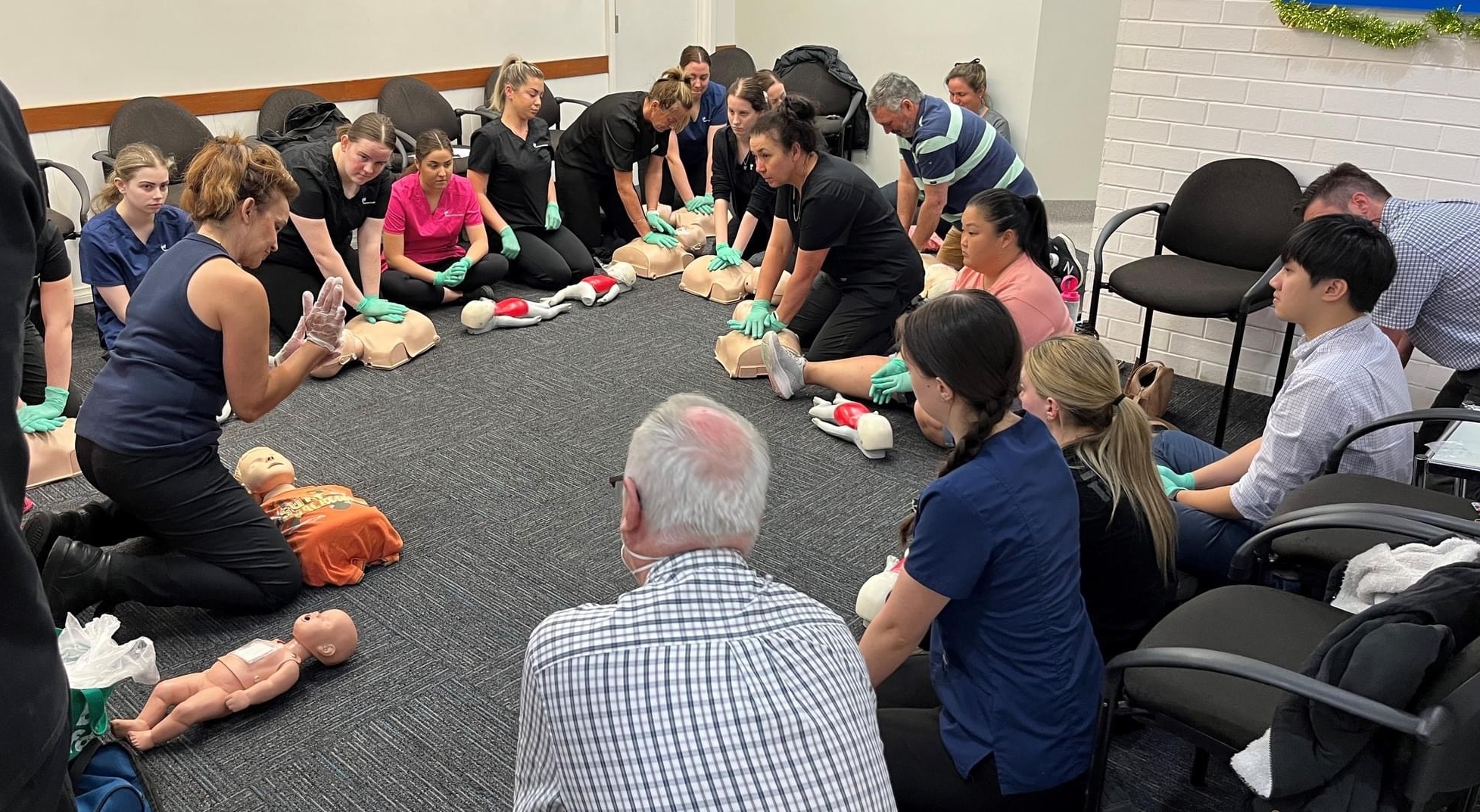
The trade-off is coordination. Onsite training requires the employer to gather the right number of participants, protect the time from job interruptions, and make sure everyone is available. Public sessions transfer much of that logistics burden to the training provider. Neither option is always better. A contractor with one expiring certificate will usually choose a public course. A company with a crew of 12 approaching renewal may find onsite delivery cleaner and more cost-effective in lost time.
Price, discounts, and the cost of leaving renewal late
First Aid Pro’s public pages indicate a $99 public price for the CPR LVR course, with some pages showing limited-time discount pricing on selected dates. Prices and promotional offers can vary, so workers and employers should check the current booking page rather than relying on an old screenshot or a colleague’s memory.
The direct course fee is only part of the cost. The larger cost often comes from poor timing. If a worker’s cpr lvr certificate expires and they cannot attend a site, the business may lose productive hours, reshuffle crews, or delay a task. For sole traders and subcontractors, an expired certificate can mean missing paid work. A $99 course fee is easy to understand. The cost of being unavailable for a job is harder to quantify but often much higher.
A sensible renewal process is simple. Keep the certificate date in the same system used for licences, tickets, lvr cpr course sydney insurance, and site access documents. Set a reminder well before expiry. If managing a team, avoid having everyone expire on the same Friday before a major project. Spread renewals where possible, or book a group session with enough lead time that absences and roster changes can be absorbed.
Some workplaces prefer to renew CPR LVR at the same time every year, even if that means a few workers refresh slightly early. That can be administratively easier than tracking scattered expiry dates. Others use a rolling system because their workforce changes often. Both approaches can work, provided the person responsible actually monitors the dates.
Why annual refreshers are more than a compliance exercise
It is tempting to view lvr cpr training as another ticket to keep current. That attitude is understandable in industries where workers carry a stack of cards, statements of attainment, inductions, and site-specific approvals. But CPR LVR is different from a purely administrative credential. It represents a response that may be needed when seconds count.
Annual refreshers reinforce sequence. They also reveal drift. A person may forget how quickly compressions should settle into a rhythm. They may hesitate over what to do first in a low voltage rescue scenario. They may remember the broad idea but miss the controlled, methodical approach that keeps the rescuer safe. Refreshers bring those details back to the surface.
There is also value in practising around other workers. In real incidents, people rarely act in isolation. Someone calls for help. Someone manages the area. Someone retrieves equipment. Someone starts CPR. Even when the course assesses individual competency, the shared experience can improve workplace conversations afterward. Workers return to site with a clearer sense of what they know, what they should not do, and why emergency planning must be more than a poster on a wall.
For supervisors, the refresher cycle is an opportunity to ask practical questions. Are the right people trained? Are certificates current? Are workers who may be first on scene actually included, or has training been limited to people who are easier to roster? Does the workplace understand the difference between general CPR training and a cpr lvr course that includes low voltage rescue?
Common misunderstandings about CPR LVR certificates
One common misunderstanding is that low voltage rescue training is only for electricians. Electricians are an obvious group, but they are not the only workers who may need the course. Workplace safety officers, builders, construction workers, mining professionals, and energy personnel may also require it depending on their roles and site expectations.
Another misunderstanding is that any first aid certificate covers the same ground. HLTAID009 Provide cardiopulmonary resuscitation covers CPR, but it does not by itself cover UETDRMP018 Perform rescue from a live low voltage panel. If the requirement is cpr lvr, the LVR unit matters. A worker holding CPR alone may still be missing the low voltage rescue component.
A third misunderstanding is around validity. A worker may have completed LVR years ago and assume that because the unit was nationally recognised, it remains acceptable indefinitely. National recognition does not remove expiry expectations. First Aid Pro states its certificate is valid for 12 months, with annual refreshers recommended. If a workplace requires current CPR LVR, old training will not usually satisfy that requirement.
There is also confusion caused by changing unit codes. Seeing UETDRMP018 instead of UETDRMP007 does not mean the course is unrelated. UETDRMP018 is the current unit and supersedes and is equivalent to UETDRMP007. The safest practice is to focus on the current code when booking new training and to keep records clear.
A practical renewal example
Consider a small electrical contracting business with eight workers. Four are electricians, two are apprentices, one is a supervisor, and one handles safety coordination across several jobs. Their client requires current cpr lvr training for workers attending certain areas. The business has a mix of expiry dates because staff joined at different times.
If the business ignores those dates, it will eventually run into a problem. One worker will be booked for a site, upload a certificate, and discover it expired the previous week. Someone else will then need to cover the shift, or the job will be delayed. The problem is not the lack of training providers. The problem is the absence of a renewal habit.
A better approach is to review the team’s certificates at the start of each month. Anyone expiring in the next 60 days is booked into a public session or included in an onsite group if enough people are due. If five or more workers need renewal, onsite training may be worth considering. If only one worker is due, a public 4-hour face-to-face course is usually easier. Same-day certificates mean the compliance record can be updated immediately after successful completion.
That kind of system is not complicated, but it prevents last-minute pressure. It also signals to workers that CPR LVR is part of normal professional readiness, not an inconvenience raised only when a client asks for documents.
Making the most of the training day
Participants get more from CPR LVR training when they arrive prepared to engage physically and mentally. The course is short, focused, and practical. Four hours can pass quickly, especially when it includes both low voltage rescue and CPR assessment.
Wear clothing that allows kneeling and movement. Expect to work on the floor for CPR practice and assessment. If you have concerns about performing CPR on the floor, address them before the session rather than waiting until assessment time. Bring whatever identification or enrolment details the provider requires through its booking process. Most importantly, treat the scenarios seriously. The habits practised in training are the habits most likely to appear under pressure.
For employers sending staff, protect the training time. A worker who is answering site calls throughout the session is not fully present. A crew that arrives late because of a rushed morning job starts at a disadvantage. If the certificate is needed for compliance, the learning deserves the same priority as the paperwork.
The best sessions I have seen in safety-critical training are not the ones where everyone tries to race through the content. They are the ones where participants ask grounded questions: What if the area is crowded? What if the casualty is larger than the rescuer? What if the first person on scene is not the electrician? Not every scenario can be rehearsed in a short course, but those questions sharpen judgment.
The real value of a current CPR LVR certificate
A current CPR LVR certificate does several things at once. It gives the worker evidence of recent, relevant training. It gives the employer a clearer compliance position. It gives site controllers confidence that people entering higher-risk work areas have completed the expected training. Most importantly, it supports a safer response if a low voltage electrical incident occurs.
The same-day certificate matters because work often moves quickly. The 12-month validity matters because skills fade and workplaces need a reliable renewal cycle. The current unit code, UETDRMP018, matters because training records should reflect the nationally recognised unit now in use. HLTAID009 matters because rescue and CPR belong together when electrical shock may lead to cardiac arrest or abnormal breathing.
CPR LVR training is a compact course, but it carries serious weight. For electricians and electrical workers, it is part of professional readiness. For safety officers, builders, construction workers, mining professionals, and energy personnel, it may be a critical piece of workplace risk control. For employers, it is a manageable way to keep teams prepared and records current.
The simplest rule is also the most reliable: do not wait for the expiry date to force the issue. Book the refresher early, make sure the course includes both UETDRMP018 and HLTAID009, choose public or onsite delivery based on the number of workers, and keep the certificate where it can be found when needed. A 4-hour face-to-face course with same-day certification is a small investment compared with the consequences of being unprepared around live low voltage electrical risks.